
What Should an AEO Report Show Beyond AI Mentions?
AEO reporting is becoming more important as businesses start measuring visibility across AI search, answer engines and traditional search. But simply counting AI mentions does not tell clients whether an AEO strategy is actually creating business value.
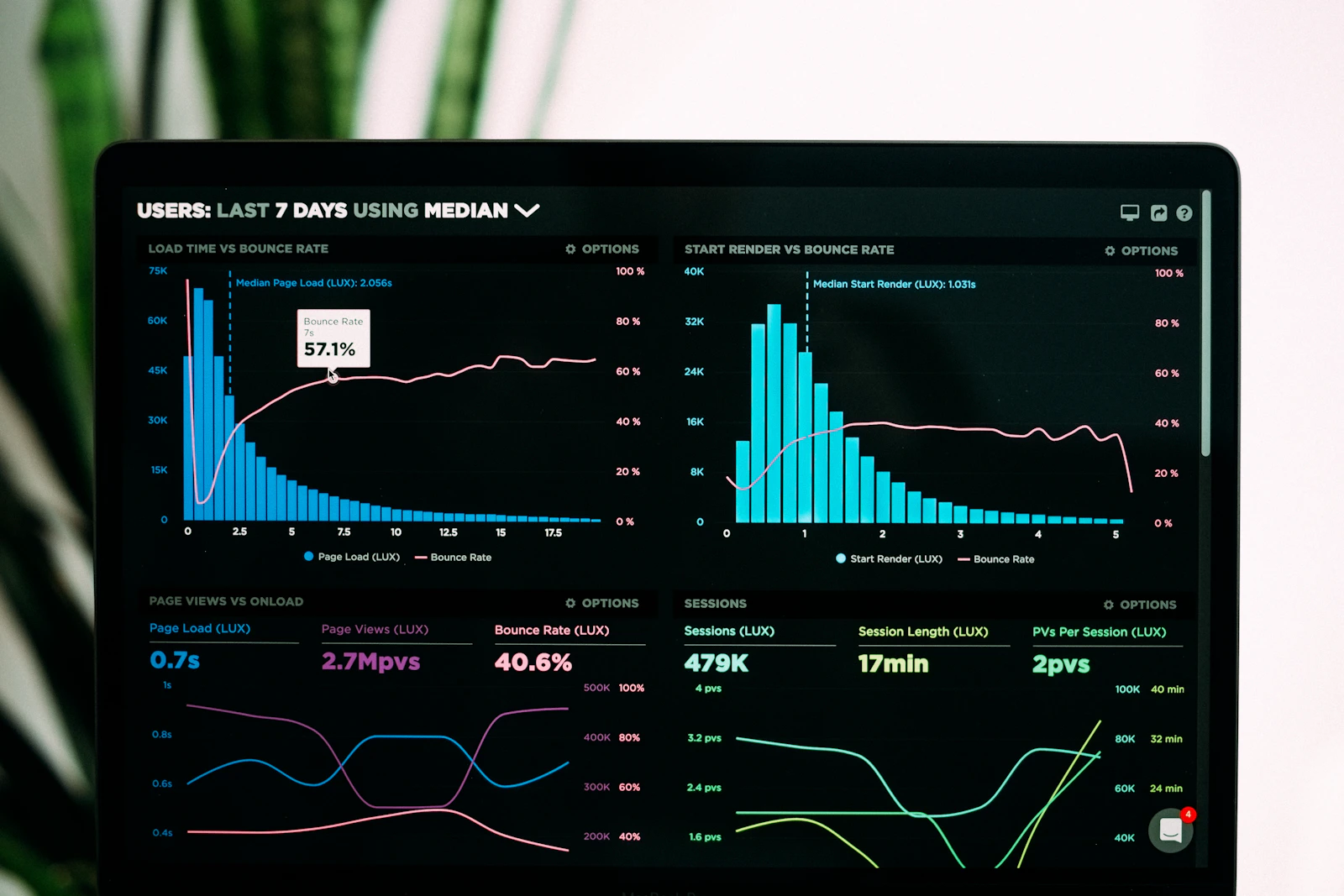
AEO reporting should answer a bigger question than “Did an AI system mention my brand?”
Agencies need to understand whether their clients are becoming more visible, more frequently cited, more competitive and more capable of generating business from AI-driven discovery.
That means a useful AEO performance report needs to combine visibility, citations, competitive context, content coverage, AI search presence and measurable business outcomes where attribution is available.
- What should an AEO report include?
- Are AI mentions enough to measure AEO performance?
- What metrics should agencies track for AEO?
- How do you measure AI search visibility?
- How do you track AI citations?
- How do you measure AI search share of voice?
- How do you track competitors in AI search?
- Can AI search traffic be measured?
- How do you track leads generated from AI search?
- How do you measure AEO ROI?
- What should an AEO report show clients?
- How is AEO reporting different from traditional SEO reporting?
- What KPIs matter most for AEO?
- How can agencies prove AEO value to clients?
What should an AEO report include?
A strong AEO report should give clients a structured view of how their brand and content are performing across answer engines and AI search experiences.
Instead of creating a report around one number, agencies can organize AEO reporting into several measurement layers:
AI Visibility
Track whether the brand appears for relevant questions, prompts and topics.
AI Citations
Track when the client’s pages or sources are referenced in relevant AI-generated answers.
Competitive Visibility
Compare brand presence and citation patterns against relevant competitors.
Business Outcomes
Where tracking exists, connect AI-driven discovery with visits, enquiries, conversions and revenue signals.
Agencies can also include content coverage, question coverage, sentiment or answer context where the underlying platform provides reliable data.
Are AI mentions enough to measure AEO performance?
No. An AI mention can be useful, but a mention by itself is only one data point.
For example, a brand could appear once in an AI-generated response while competitors appear across dozens of relevant questions. Looking only at the existence of a mention would hide that difference.
A more useful AEO performance report can evaluate:
- Number of relevant prompts monitored
- Brand visibility across those prompts
- Frequency of appearances
- Pages or sources being cited
- Competitor visibility
- Changes over time
- Commercial topics where visibility exists
- Available traffic and conversion signals
This turns an isolated AI mention into a broader visibility measurement framework.

What metrics should agencies track for AEO?
The right AEO reporting metrics depend on the client’s objectives, the AI platforms being monitored and the data available. However, agencies can build a practical measurement framework around several recurring categories.
| Metric | What It Shows | Why It Matters |
|---|---|---|
| AI Visibility | How often the brand appears for tracked queries | Shows presence across relevant AI discovery opportunities |
| AI Citations | How frequently client content is referenced | Shows source-level visibility |
| Share of Voice | Brand visibility compared with competitors | Provides competitive context |
| Prompt Coverage | Percentage of monitored questions where the brand appears | Shows breadth of AI visibility |
| Source Coverage | Which pages contribute to AI visibility | Helps identify successful content |
| AI Referral Traffic | Visits attributed to AI platforms where measurable | Connects visibility with website activity |
| Conversions | Leads or actions attributed to AI referrals where trackable | Connects AEO with business outcomes |
How do you measure AI search visibility?
AI search visibility can be measured by creating a consistent set of relevant prompts and tracking how the brand appears across those prompts over time.
The important word is consistent. If an agency changes every prompt every month, the resulting report becomes difficult to compare.
A useful framework can divide prompts into:
- Brand queries
- Product or service queries
- Problem-based questions
- Commercial comparison queries
- Industry questions
- Location-based questions
- High-intent buyer questions
Agencies can then monitor visibility changes across the same categories and identify where the client’s AI presence is expanding or declining.
How do you track AI citations?
AI citation tracking focuses on the sources referenced within AI-generated answers.
Agencies can record:
- Whether the client’s website was cited
- Which URL was cited
- Which topic or question triggered the citation
- Which competitors were cited
- How citation patterns change over time
- Which content types are repeatedly referenced
This information can reveal something that traditional ranking reports often miss: which individual pages are contributing to AI visibility.
For businesses investing in Offshore AEO Services , citation tracking can also help identify content gaps that deserve further optimization.
How do you measure AI search share of voice?
AI search share of voice can be used as a comparative metric. Instead of asking only whether a company appears, agencies can examine how often the company appears relative to competitors across the same monitored question set.
For example, an agency might monitor 100 commercial and informational prompts and record the brands appearing in the answers. The report can then show the client’s visibility alongside selected competitors.
Share of voice should therefore be treated as a defined measurement within a specific prompt set rather than a universal percentage that represents every AI search.
How do you track competitors in AI search?
Competitive tracking is one of the most useful additions to an AEO report.
If a competitor repeatedly appears for questions where the client is absent, the agency can investigate the underlying content opportunity.
| Competitive Signal | Question to Investigate |
|---|---|
| Competitor cited more frequently | Does the competitor cover the topic more comprehensively? |
| Competitor appears for more commercial prompts | Does the client have enough bottom-of-funnel content? |
| Competitor pages cited repeatedly | Which content formats or topics are performing? |
| Client visible but rarely cited | Is the content discoverable but not sufficiently useful for the query? |
Agencies can then use these findings to guide content, technical SEO, digital PR and broader search strategy.

Can AI search traffic be measured?
In some cases, yes. AI platforms and referral systems can generate measurable website traffic when users click through to a website.
Analytics platforms may identify referral sources or other signals depending on the platform, implementation and reporting setup.
However, agencies should distinguish between measurable referral traffic and all AI-driven influence.
A person may discover a brand through an AI answer, remember it, and later visit the website directly or search for the brand through Google. That journey may not be fully attributed to the original AI interaction.
Therefore, AI referral traffic is useful, but it should not be treated as a complete measurement of AI influence.
How do you track leads generated from AI search?
Lead tracking becomes more valuable when AI search visibility is connected to actual conversion paths.
Depending on the analytics setup, agencies can examine:
- AI referral sessions
- Landing pages receiving AI referral traffic
- Form submissions
- Phone enquiries
- Demo requests
- Quote requests
- Tracked sales opportunities
UTM parameters, CRM source fields, analytics events and lead-source questions can also help businesses understand how prospects discovered them.
But the report should clearly separate directly attributable leads from broader assisted or inferred influence.
How do you measure AEO ROI?
AEO ROI should not be reduced to the number of AI mentions.
Agencies can build an ROI framework around the relationship between investment, measurable outcomes and strategic visibility.
| Layer | Examples |
|---|---|
| Investment | Content, AEO strategy, technical work, reporting and optimization |
| Visibility | AI appearances, prompt coverage and citations |
| Traffic | AI referral visits and engaged sessions where measurable |
| Conversions | Leads, demos, enquiries or purchases attributed to AI referrals |
| Commercial Value | Revenue or pipeline associated with measurable AI-originated activity |
This creates a more realistic approach to AEO performance measurement because it recognizes both measurable outcomes and the limits of current attribution.
What should an AEO report show clients?
Client reporting should be simple enough to understand while retaining enough detail for the agency to make strategic decisions.
A practical AEO client report can include:
- Executive summary of major changes
- AI visibility trend
- Tracked prompt coverage
- AI citation changes
- Top cited URLs
- Competitor visibility comparison
- Share of voice within the tracked prompt set
- Newly visible topics
- Lost visibility or citation opportunities
- AI referral traffic where measurable
- AI attributed leads where measurable
- Recommended actions for the next reporting period
The final section is particularly important. Clients should not only see what changed; they should understand what the agency plans to do next.
How is AEO reporting different from traditional SEO reporting?
Traditional SEO reporting often focuses on rankings, organic traffic, impressions, clicks, conversions, backlinks and technical performance.
AEO reporting adds another layer focused on how a brand and its information appear within AI-generated answers and answer-engine experiences.
| Traditional SEO Reporting | AEO Reporting |
|---|---|
| Keyword rankings | AI prompt visibility |
| Google impressions | AI answer appearances |
| Organic clicks | AI referral activity where measurable |
| Backlinks | AI citations and cited sources |
| Search competitors | AI visibility competitors |
| SERP positions | Answer presence and source visibility |
The two reporting systems should not necessarily replace one another. For many businesses, AEO works as an additional measurement layer alongside their existing SEO reporting.
What KPIs matter most for AEO?
There is no single universal AEO KPI. The most useful metrics depend on the client’s goals.
For a brand focused on awareness, AI visibility and prompt coverage may be important. For a B2B company, citations and visibility across high-intent commercial questions may matter more. For an ecommerce business, AI referral traffic and measurable conversions may carry greater commercial importance.
A practical KPI framework can therefore include:
- Visibility: How often does the brand appear?
- Coverage: How many relevant prompts produce visibility?
- Citations: How often is client content referenced?
- Competition: How does visibility compare with competitors?
- Traffic: Is AI-generated referral traffic measurable?
- Leads: Are AI referrals generating enquiries?
- Revenue: Can AI-originated commercial outcomes be attributed?
How can agencies prove AEO value to clients?
Agencies can prove AEO value by moving the conversation away from isolated AI mentions and toward measurable changes in visibility, competitive position and business outcomes.
A strong reporting workflow can follow four steps:
1. Establish a baseline
Record the client’s initial visibility across a defined prompt set, including relevant competitors.
2. Track changes consistently
Use a stable reporting framework so month-to-month changes can be interpreted rather than simply displayed.
3. Connect visibility to business signals
Where data is available, connect AI referral activity with website engagement, leads, opportunities and conversions.
4. Turn reporting into action
Every report should finish with recommendations. For example, the agency might identify a missing topic, strengthen an existing page, improve internal linking, create a comparison page or expand authoritative content.
This is where AEO reporting becomes part of an ongoing optimization strategy rather than simply another monthly dashboard.
How should agencies build an AEO reporting workflow?
Agencies managing multiple clients need a repeatable reporting process. Without a consistent workflow, every account can end up using different prompts, metrics and definitions.
A scalable workflow can look like this:
- Define the client’s commercial topics.
- Create a fixed core prompt set.
- Add new prompts as search behavior changes.
- Record brand and competitor visibility.
- Track cited URLs and content patterns.
- Review measurable AI referral activity.
- Connect available lead and conversion data.
- Identify content and optimization opportunities.
- Prepare a client-friendly summary.
- Turn findings into the next month’s action plan.
Agencies that want to add AEO to existing SEO retainers can also consider a white-label SEO fulfillment model so specialist execution can be handled without rebuilding the entire internal delivery structure.

What should an AEO report avoid?
AEO reporting can lose credibility when it presents uncertain data as precise business measurement.
Agencies should avoid:
- Presenting one AI mention as proof of campaign success
- Claiming universal AI visibility from a small prompt sample
- Treating AI citations as guaranteed rankings
- Using inconsistent prompts every reporting period
- Reporting traffic without explaining attribution limitations
- Showing metrics without explaining what changed
- Focusing on vanity metrics instead of client objectives
Transparent reporting is particularly important because AI search experiences can change, vary by query and provide different forms of visibility.
Turn AEO Reporting Into a Growth Strategy
AEO reporting should ultimately answer three questions: Where are we visible? Where are competitors visible? And what should we do next?
AI mentions, citations and visibility are useful starting points, but the real value comes from connecting those signals with content strategy, competitive research, website performance and measurable business outcomes.
For agencies, this also creates an opportunity to make AEO a natural extension of existing SEO services rather than presenting it as an isolated technology product.
A strong AEO report does not simply tell a client that their brand was mentioned. It shows the context behind that visibility and turns the data into the next set of decisions.
Need AEO Reporting for Your Clients?
Vamrich Solutions helps agencies build scalable SEO and AEO fulfillment workflows covering AI search visibility, citations, content optimization and performance reporting.
Discuss Your AEO Requirements